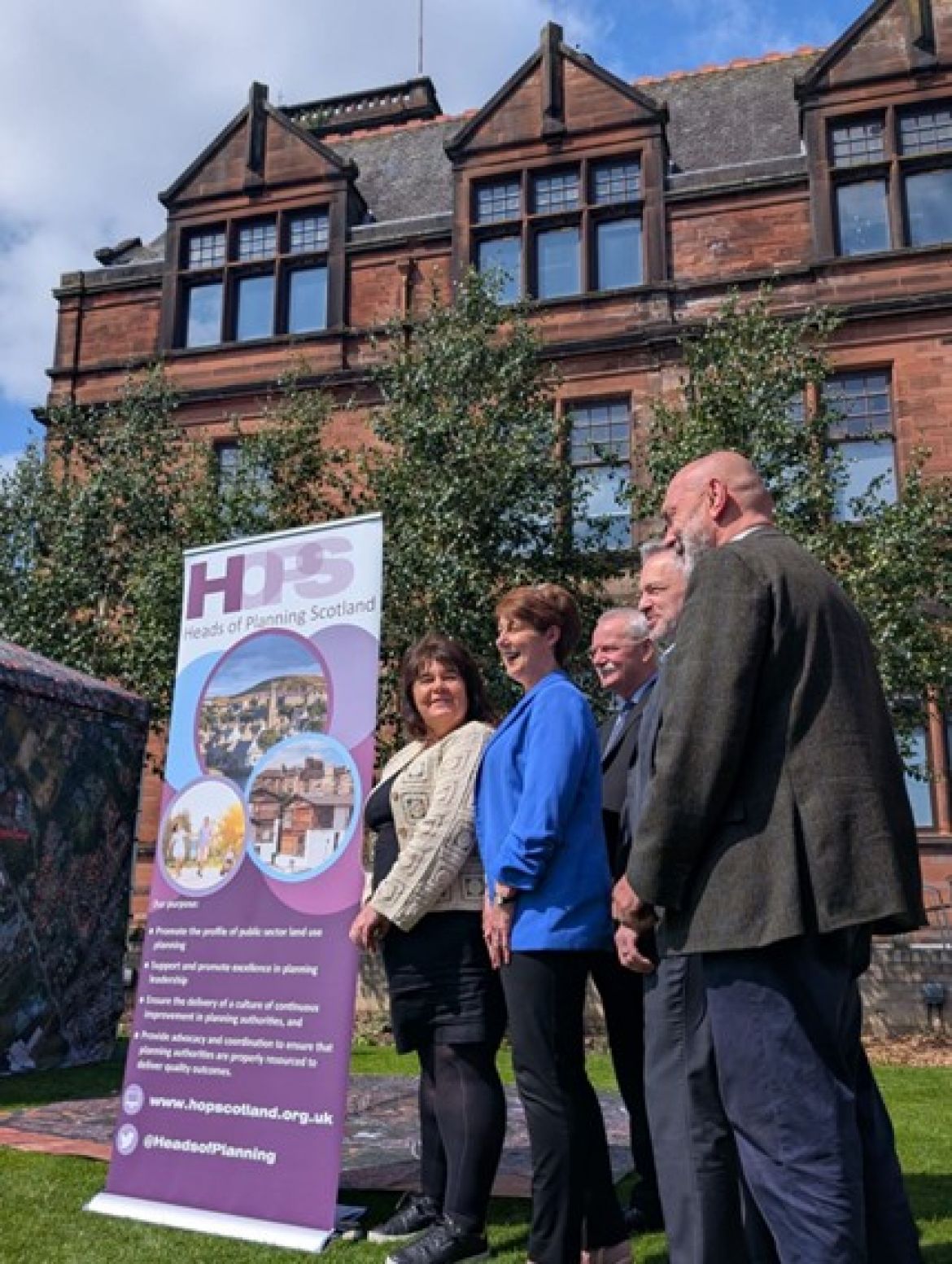


The Heads of Planning Scotland’s annual conference brings together planners from local authorities, key agencies, government, universities and the private sector.
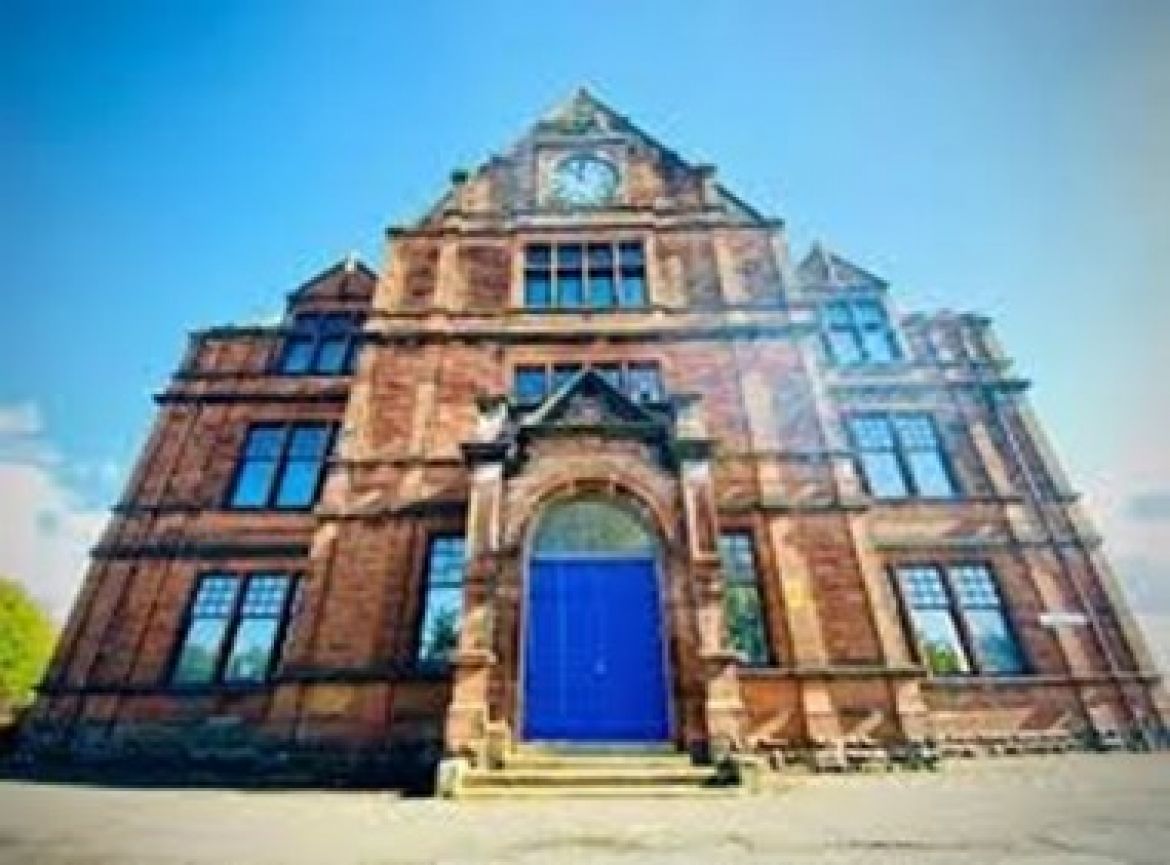
This year’s event was hosted by East Ayrshire Council in the CentreStage building, itself an example of the impact that planning can have. The former Kilmarnock Academy building being one of the largest community asset transfers in the country, the disused building has now been brought back into life as a cultural, social and community venue.
Key topics to be discussed were:
*The role that planning can have in public sector reform
*How planning can make an impact on the housing emergency
*The role of leaders in planning
Pamela Clifford, Chief Planning Officer and Chair of HOPS and Eddie Fraser, Chief Executive of East Ayrshire Council introduced delegates to the conference with a call for planners to make positive change in communities.
Public Sector Reform
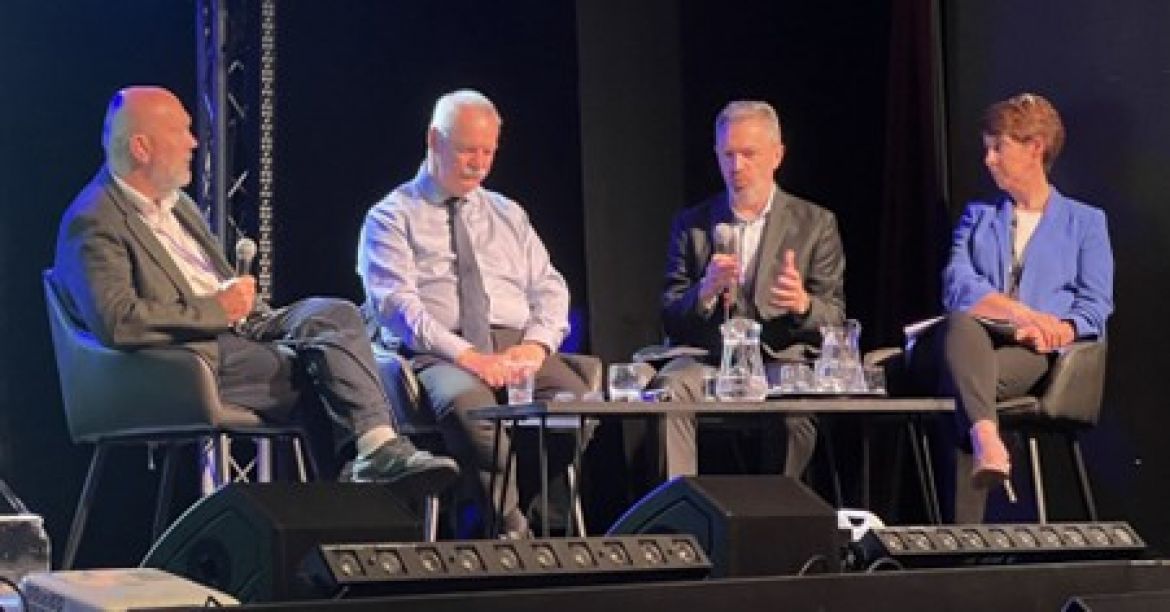
The conference began with a deep dive into how public-sector decision-making influences planning, what improvements can be made and how to do what communities want. Including input Eddie Fraser (East Ayrshire Council), Gerard McCormack (Improvement Service) and Fiona McKechnie (CentreStage) and chaired by Ross Martin. Key takeaways from the session were that we are planning for people bot the process alone, and there is a need for planning to instil trust to help communities take forward big projects.
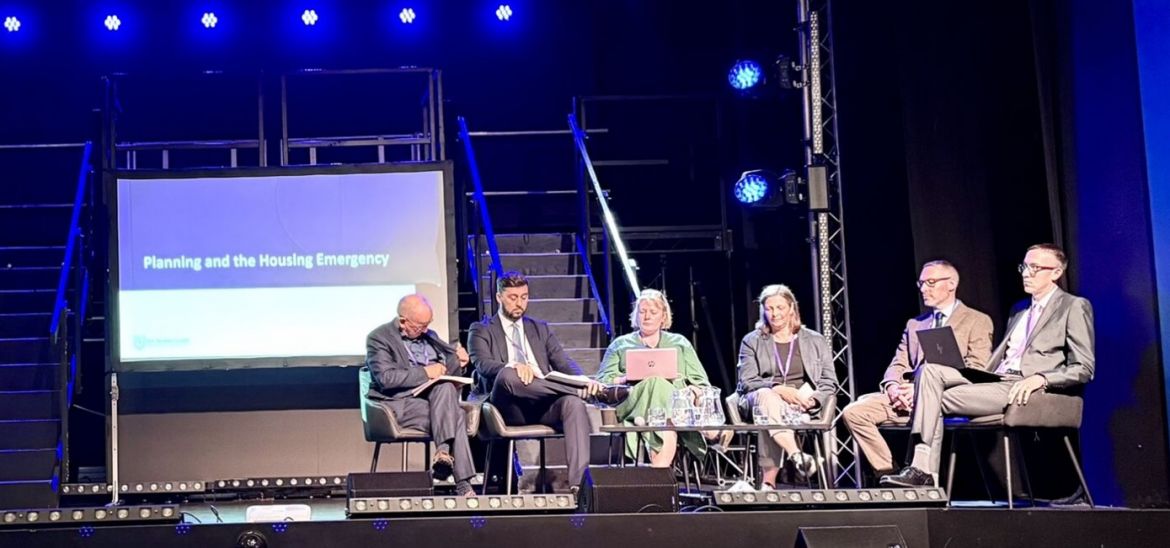
Planning and the Housing Emergency
This panel session looked at the role of the planning system to help deliver solutions to the housing emergency. The panel includes Blair Miller (East Ayrshire Council), Kevin Murphy (Homes for Scotland), Pam Ewen (Fife Council), Dr Fiona Simpson (Chief Planner at the Scottish Government) and will be chaired by Steve Tolson (former chair of the Housing and Place Delivery Forum) and Summarised by Dr Andrew Hoolachan (University of Glasgow). Discussion included developing the right homes in the right places, how housing can be a catalyst for regeneration, and a key driver of health and wellbeing.
Workshops
This year’s conference included a series of workshops important to planning in East Ayrshire.
- East Ayrshire Council planning staff, David Wilson and Mhairi Douglas, covered the scale of the restoration projects following the demise of the opencast coal industry.
- Jonathan McQuillan and Pelin Ekdi of Anderson Bell + Christie spoke about their roadmap to achieving carbon balance through the carbon reduction in buildings and rapid urban greening, and how planning can help deliver this.
- Lucy Broadie from Scottish Water discussed drainage partnerships and how planners and Scottish water can work together to reduce flood risk and also promote other benefits such as biodiversity enhancement.
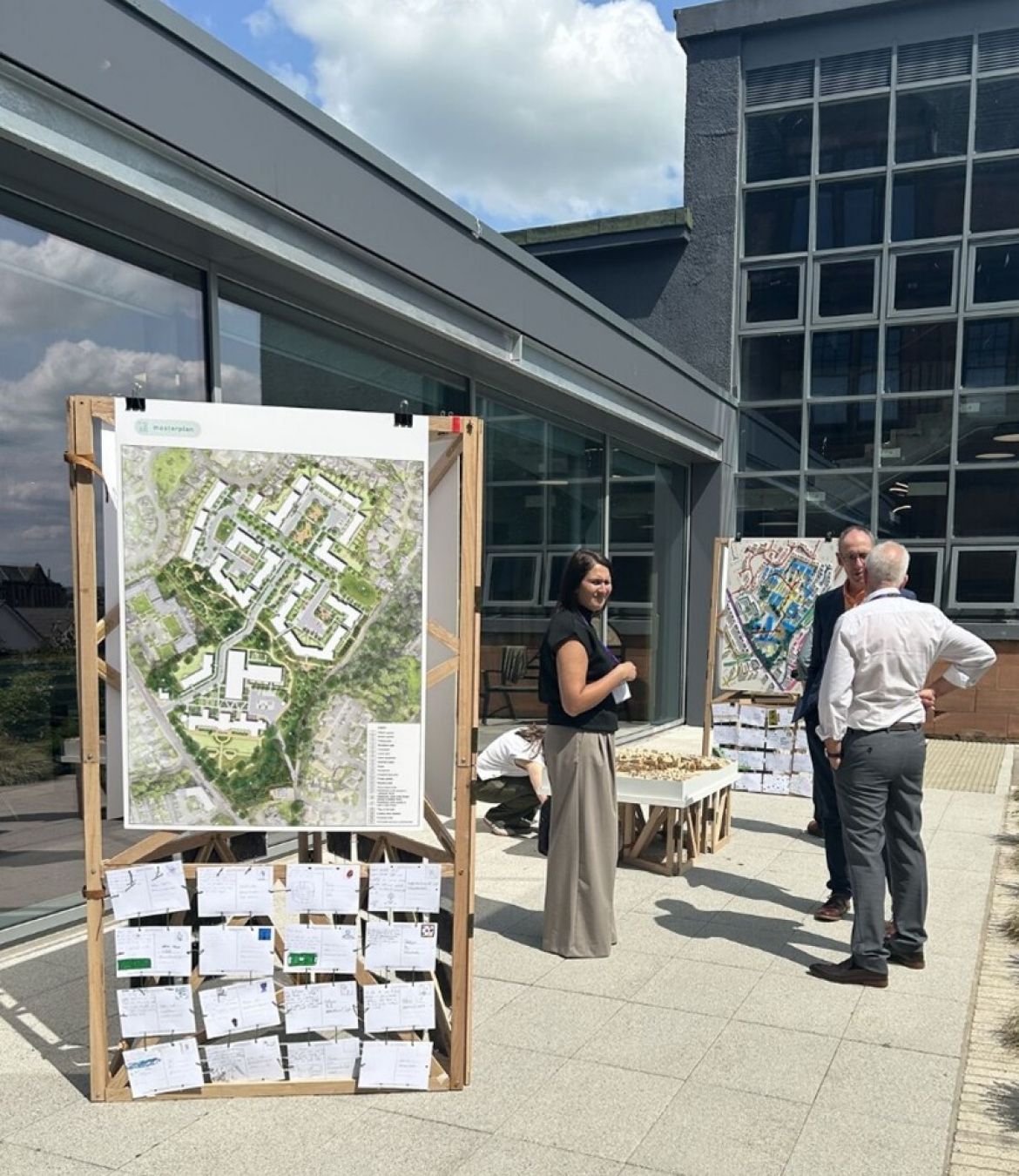
- Sarah Brown of Anderson Bell + Christie took delegates through an exhibition of inclusive engagement methods used in the Liberton Masterplan.
- Anna Gaffney from A Place in Childhood explored the impact of children and young people’s engagement in the planning system and looked at ways to improve their involvement.
- Aline Kirkland from the Improvement Service looked at how planners, geospatial analysts, and local authorities assess and promote sustainable, accessible communities through the mapping and analysis of twenty-minute neighbourhoods.
- Joshua Doyle of Urban Intelligence explored how recent developments in digital planning and the work they are carrying out with East Ayrshire Council to deliver collaborative planning policy work.
- Last but not least delegates were given an opportunity to go on a walking tour around CentreStage and look at how the restoration process was undertaken and the improvements it has made to both the building and the communities that use it.
Leadership in Planning
This panel session looked at the impact of leaders in planning, particularly the role of Elected Members and Chief Planning Officers. The panel will include; Johanna Boyd (Planning Aid Scotland), Chris Cox (South Ayrshire Council), Robert McKinnon (Keepmoat) and Councillors Barry Douglas and Graham Barton (East Ayrshire Council). Chaired and summarised by Irene Beautyman and Craig McLaren (Improvement Service). Key themes of the discussion were around demonstrating culture change through behaviours and ways of working, giving powers to others when they can have the most impact and being courageous to make the changes that are needed.
Key Themes for Learning
1.People Before Process – planning should be around people, place, and purpose.
2.Leading with Courage and Vision - Empower leaders at all levels to challenge the status quo and champion long-term, people-centred planning.
3.Sharing Power to Build Stronger Communities – Shift power dynamics by enabling communities, local leaders, and partners to help shape their own futures through their engagement with the planning system.
4.Planning as a Force for Trust - Rebuild public trust in planning by being open, fair, and accountable.
More information and contact details
HOPS will be collating further information from the conference shortly and this will be available on the HOPS website.
If you wish to speak to HOPS please contact the secretariat at hops@improvementservice.org.uk