

SAVVI Financial Hardship Guide
The SAVVI process provides a structured route from understanding a vulnerability to delivering support and improving outcomes. This section takes you through each phase and the key decisions needed to develop a Financial Hardship initiative.
The previous sections explored why local authorities may wish to take a proactive approach to tackling financial hardship.
The remainder of this guide focuses on how to do it.
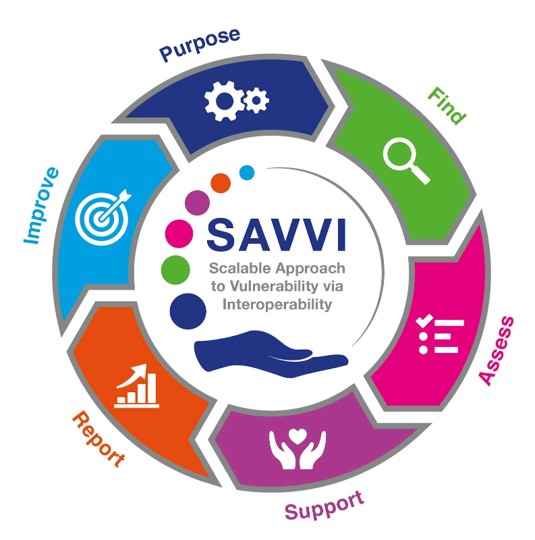
SAVVI breaks the development of an initiative into six connected phases:
- PURPOSE – Define the problem you are trying to solve, who you are seeking to support, and what success looks like.
- FIND – Identify the information, risk factors and models that can help identify people who may benefit from support.
- ASSESS – Establish whether support is needed and determine the most appropriate next steps.
- SUPPORT – Connect people with services and interventions that address their identified needs.
- REPORT – Measure activity, outcomes and impact.
- IMPROVE – Use learning from the initiative to refine and strengthen future approaches.
Each phase builds on the previous one. While it can be tempting to start with data, successful initiatives typically begin by developing a clear understanding of the vulnerability being addressed, the support available, and the outcomes that the initiative is seeking to achieve.
The diagram below shows how the six SAVVI phases fit together as a continuous improvement cycle.
You do not need to complete every phase perfectly before moving forward. Many successful initiatives begin with a simple approach, test what works, and refine their methods over time. The SAVVI process is designed to support this iterative approach.