


The Improvement Service is working with remote, rural and island local authorities and their partners to share learning and develop tools to overcome shared barriers and tackle child poverty and wider inequality.
Our Remote, Rural and Island Child Poverty Network meets quarterly. It provides an informal space to share practice, build links and identity and raise common concerns. The group has a particular focus on understanding poverty and how data, intelligence and the voice of lived experience can support more effective approaches to service delivery and poverty reduction. For more information contact our Rural Child Poverty Officer (james.taylor@improvementservice.org.uk),
Background
In 2022, the Improvement Service received funding from the Scottish Rural Network to work with local authorities to learn more about barriers to tackling child poverty in remote, rural and island setting.
The project took a design based approach, bringing a wider range of local partners together to identify common obstacles to reaching families in need of financial support. The barriers identified included:
- That national poverty statistics often miss low income families in remote area, where populations are widely dispersed.
- That child poverty statistics are often based on income not outgoings. This can be problematic in remote rural and island settings, where the cost of living pushed families into hardship even when their incomes wouldn’t suggest they are experiencing poverty.
- That it can be hard to engage families with direct experience of poverty in remote and rural areas because of practical barriers like poor transport links and an increased sense of stigma and visibility.
- That the complexity of data sharing rules makes it hard for local government to know when they can reach out to those in need of support
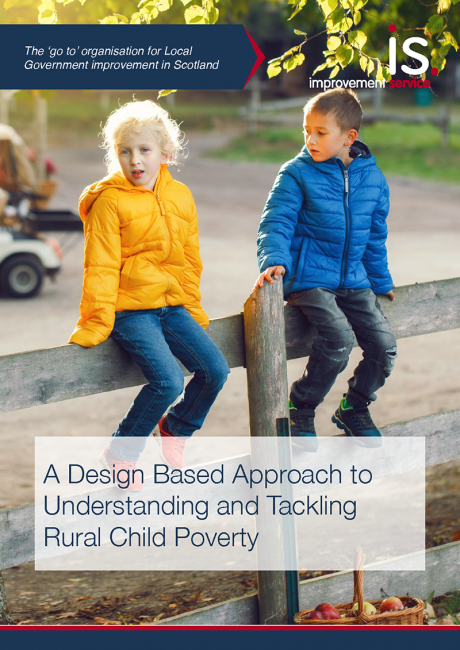 This report provides further detail and proposed solutions in relation to each: A Design-based Approach to Understanding and Tackling Rural Child Poverty (improvementservice.org.uk)
Following publication of the report, the Remote, Rural and Island Child Poverty Network was established, and work got underway to share and design solutions to the barriers identified. More detail on the learning shared is available below:
Using data and intelligence to understand local context
The following presentations include information and guidance on how data and intelligence can be used to develop a granular picture of child poverty in rural settings. The authorities involved took inspiration from one another, developing on and elaborating existing approaches.
- In this video, representatives of Argyll and Bute Council discuss how they have cross-referenced local data to identify pockets of potential unmet need in their communities
- In this video, the Improvement Service’s Research Manager and representatives of Angus Council talk about how they have replicated the approach of the Scottish Borders, using Child Poverty statistics, alongside information on uptake of local benefits to may deprivation.
- In this video, Moray Council explain how they included data around uptake of national benefits in their analysis of poverty and need in the area.
- In this video, Perth and Kinross Council explain their use of Power BI to analyse poverty in their most deprived localities.
- A further presentation from Ewan Doyle on the Workforce Mobility Project highlights how local data can be used to inform service delivery, in this case the delivery of suitable and accessible public transport.
Sharing data within and between local organisations
As a result of concerns about the complexity of data sharing rules preventing work to tackle child poverty, the IS teamed up with SAVVI (Scalable Approach to Vulnerability Via Interoperability). Together we are working with three local areas (Angus, Argyll & Bute and Inverclyde) to identity legitimate and ethical ways of re-using personal data to identify and reach families at highest risk of child poverty, with the aim of offering those families advice and wider support to avoid financial crisis. The Project Initiation Document provides further detail.
The project is considering how locally held data (such as information on Crisis Grant applications and Council Tax arrears) could be combined with data held by the DWP/HMRC (UC data on household type) and that held by Social Security Scotland (on receipt of Scottish Child Payment) to identify and proactively reach out to those at highest risk of poverty and associated negative outcomes.
SAVVi is involved in proactive dialogue with the DWP around this work and is seeking to establish similar links with the Scottish Government. If the project is successful in identifying legal pathways, all relevant documentation will be made widely available to support other councils and their local partners to replicate or build upon the approach.
Read SAVVI’s blog giving an overview of the process to date.
Understanding the impact of the cost of living in remote and rural settings
Work is ongoing to understand how the cost of living varies in remote, rural and island authorities and how this affects our understanding of - and our response to - rural child poverty. The following presentations highlight learning to date:
- In this video Dr Juliet Stone of the Centre for Social Policy at Loughborough University gives an overview of academic research on the how the Minimum Income Standard is affected by rurality.
- In this video, James Debenham, Principal consultant for CACI, gives an overview of how data sourced form the private sector can unlock insights into the needs of local populations.
- In this Video, East Renfrewshire Council highlight how they have worked together with the Smart Data Foundry to better understand the needs of families not traditionally considered to be at risk of poverty.
Rural Childcare Challenge
The 'Rural Childcare Challenge' is a collaborative project initiated by the Improvement Service’s Remote and Rural Child Poverty Network to explore the challenges created by limited access to flexible, affordable, high-quality childcare in remote, rural and island communities and how these challenges impact local action on tackling child poverty.
Childcare is closely linked to the three key drivers of child poverty: insufficient income from employment, the rising cost of living and insufficient income from social security. Through research, engagement and collaborative design, this work brings together local authorities, third-sector partners and national stakeholders to better understand shared challenges and identify practical solutions.
The Kickstart paper sets the foundation for this work. It summarises early research and engagement with local authorities, identifies five shared problem statements affecting childcare in rural areas, and initiates discussion on where action is needed locally and nationally. The final report builds on this by presenting the findings from the full Childcare Challenge process, including collective problem definition and co-created solutions developed with partners. Together, the papers outline both the scale of the challenge and potential ways forward.
In September 2026, the Improvement Service hosted an online session to explore further the relationship between childcare and child poverty in rural and island areas following the publication of Bringing Hope, Building Futures the Scottish Government’s latest Tackling Child Poverty Delivery Plan (hyperlink). The session brought local authority childcare, employability and child poverty leads together, with input from the Jospeh Rowntree Foundation, Scottish Government, COSLA and the IS. It was an opportunity to explore how local and national partners can work together to ensure extended childcare provision can support a reduction in child poverty, particularly in rural and island contexts.Next steps will be communicated with the Rural Child Poverty Network.
Next meeting: Tuesday 27th October
For any questions, please get in touch with james.taylor@improvementservice.org.uk.
For more information, or to join the Remote, Rural and Island Child Poverty Network please contact:
Hanna McCulloch, National Coordinator for Local Action on Child Poverty
hanna.mcculloch@improvementservice.org.uk
-
Improving outcomes for people and communities affected by poverty, inequality, trauma and adversity: Joining the dots across key policy agendas (briefing)
There are a number of key policy agendas that are part of a broader ambition to improve outcomes for people and communities across Scotland affected by poverty, inequality, trauma and adversity. This briefing highlights the links across these and explores opportunities for re-framing these multiple policy ambitions as opportunities to work together around the common goal of improving outcomes for people and communities.
-
Improving outcomes for people and communities affected by poverty, inequality, trauma and adversity: joining the dots across key policy agendas (infographic)
This infographic provides an overview of a small number of key national policy agendas, approaches and commitments, all designed to support a cross-policy, person-centred approach to improving outcomes for people and communities across Scotland affected by poverty, inequality, trauma and adversity.